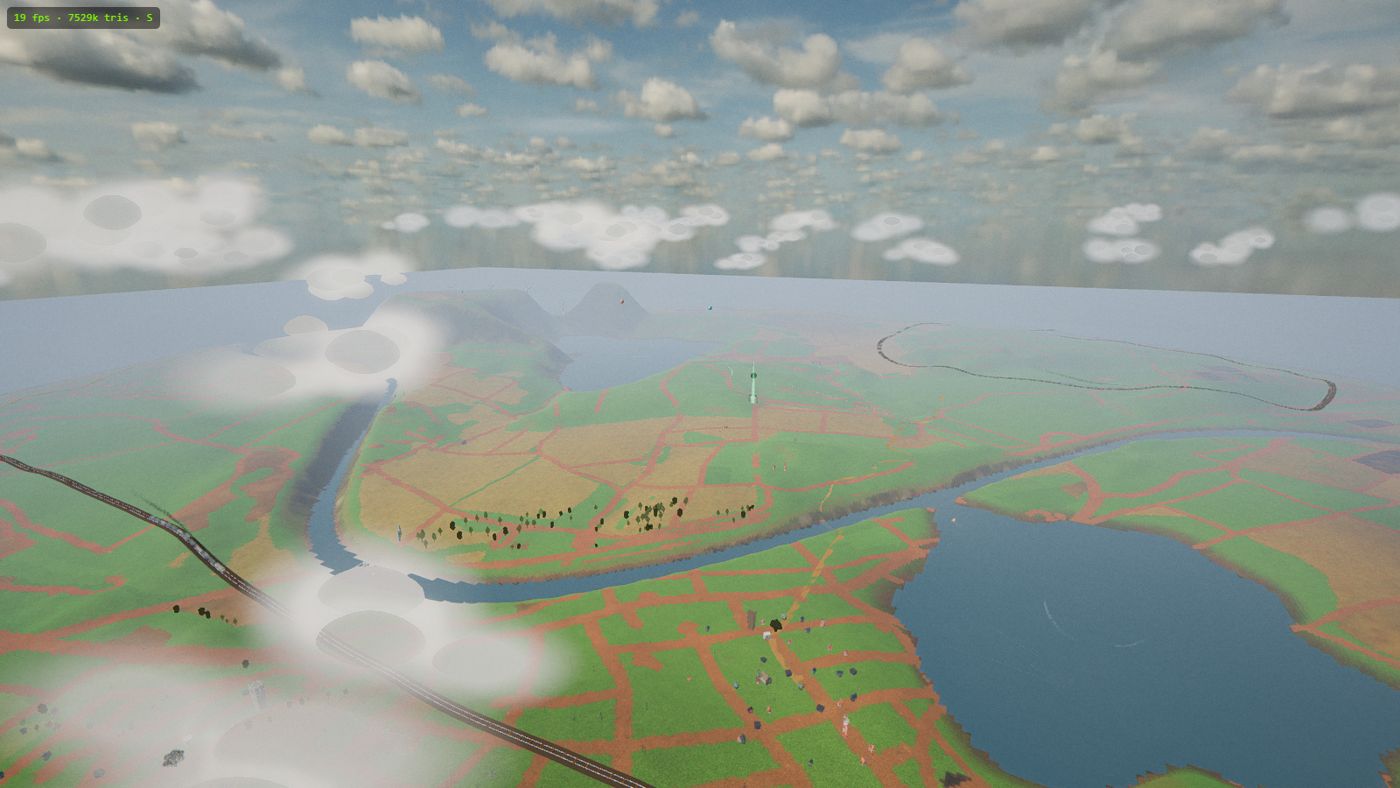
Start at the strip
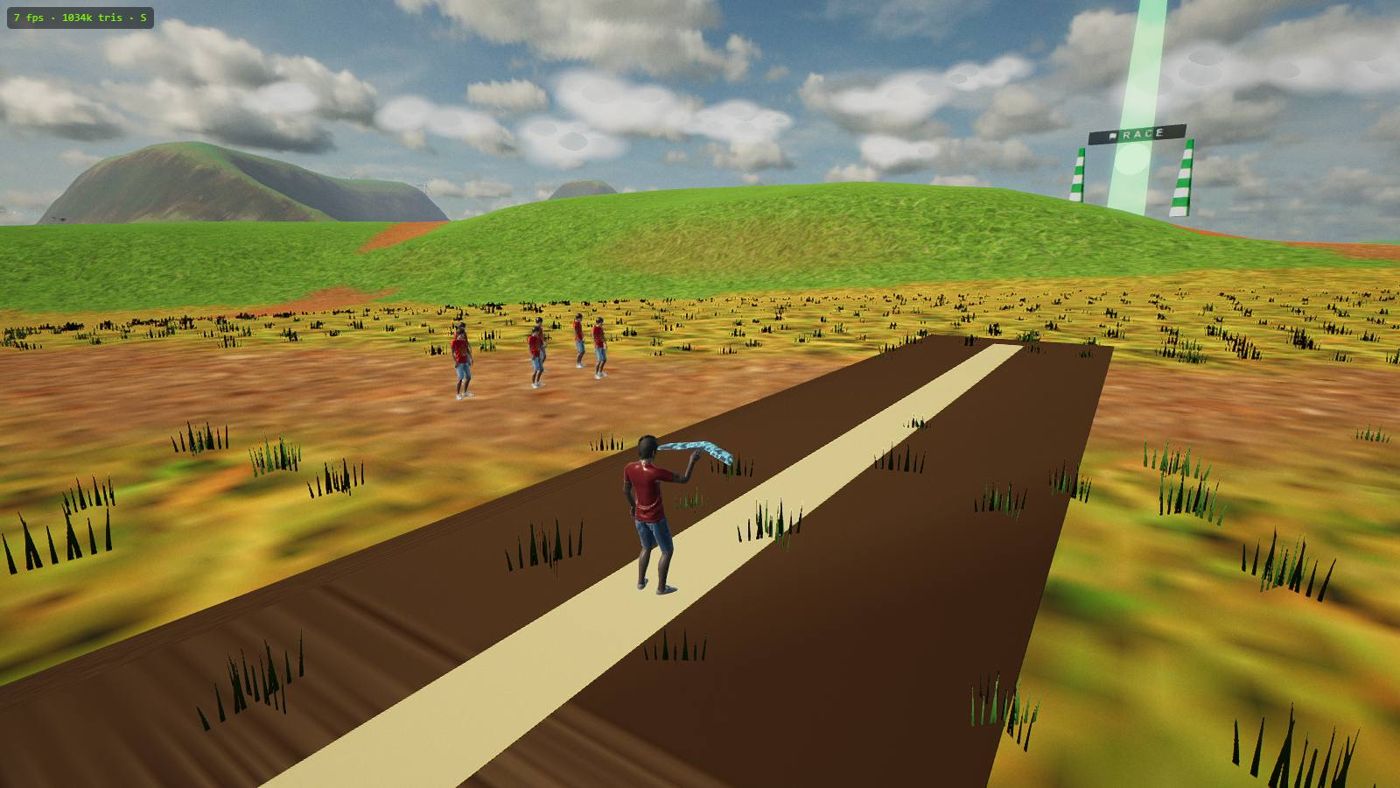
Every flight begins on a dirt airstrip cut into the fields — this is home, the spot R resets you to and the place the H return-to-home autopilot flies back toward. Press Space and a launcher jogs down the strip and throws your wing at flying speed, with a small crowd of spectators watching from the grass. Floating over the runway is a green START arch. It is not decoration: fly through it and a lap begins on the island's gate course. There is deliberately no race menu — every launch is free flight, and the race simply lives in the world, waiting. More on that at the end of the tour.
If you have not flown yet, the how-to-play guide covers the launch, the pull-back-to-climb convention, and everything else. Here we assume you are airborne and curious.
The quilt: farmland with real bones
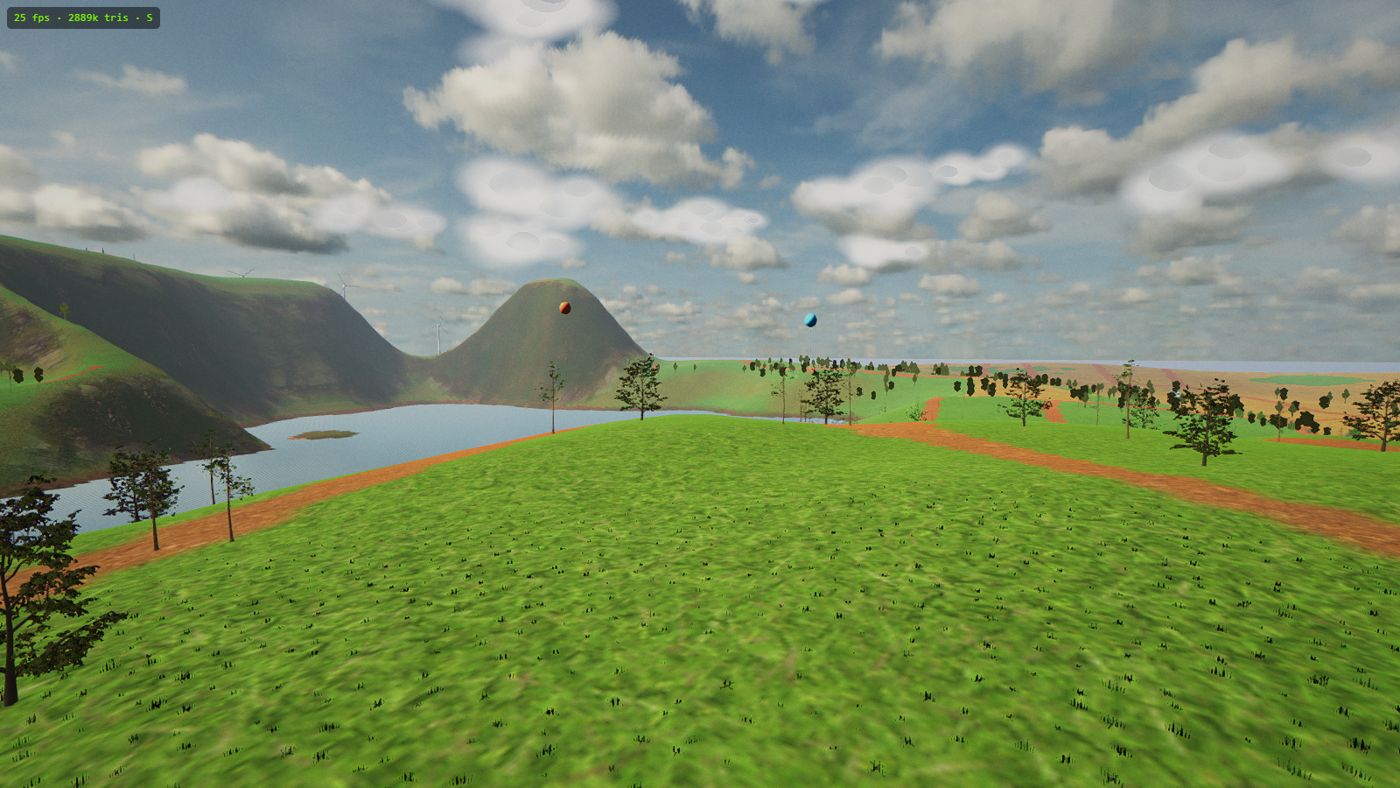
Climb out from the strip and the island resolves into a patchwork of crop fields stitched together with dirt roads. The terrain underneath is not procedural noise — it started as a Copernicus satellite elevation model of real countryside, reshaped into this island, which is why the hills roll the way actual hills do: long shoulders, gentle saddles, valleys that drain somewhere sensible. Hamlets and farmsteads sit where a farmer would put them, and a few proper villages cluster along the roads. (The full pipeline from satellite data to game world is its own story — see how it's built.)
Why it's fun to fly: this is low-pass country. Drop to a couple of metres and run a field boundary with a tree line flicking past your wingtip, then pop over the hedge into the next field. The quilt gives you endless natural slalom lines, and because the ground genuinely undulates, holding low altitude takes real pitch work rather than just flying level. It is the cheapest thrill in FPV and it never gets old — the whole reason people fly FPV wings in the first place.
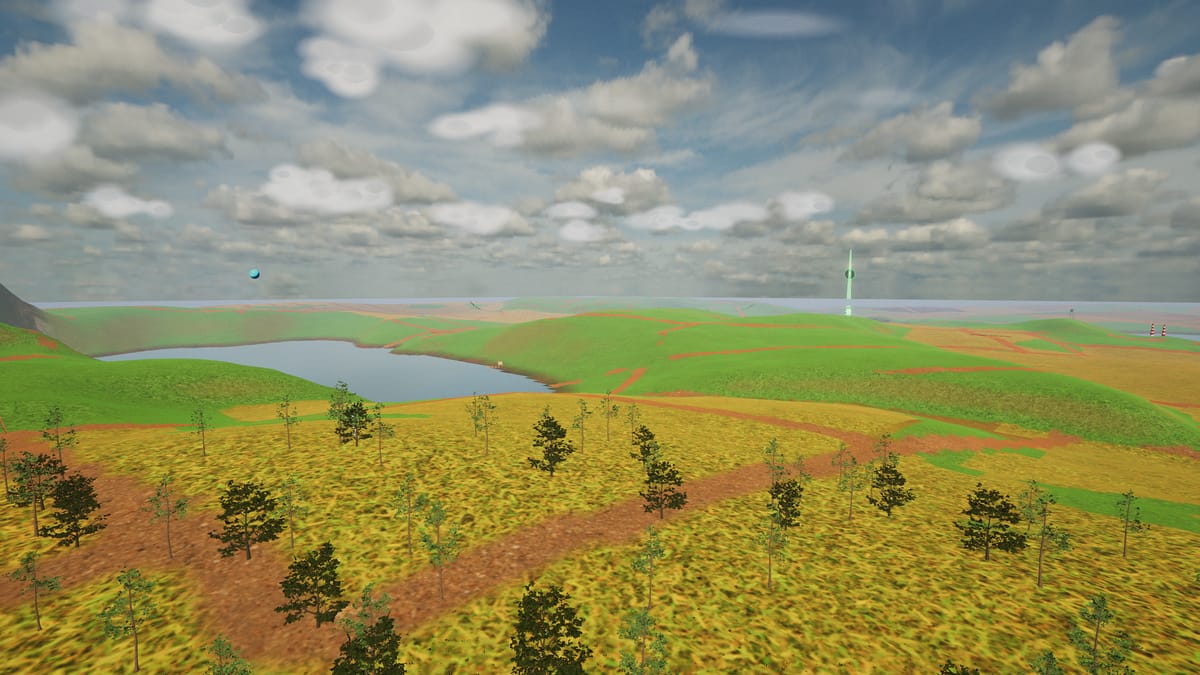
The lakes: boats, jetties, and water you can (almost) touch
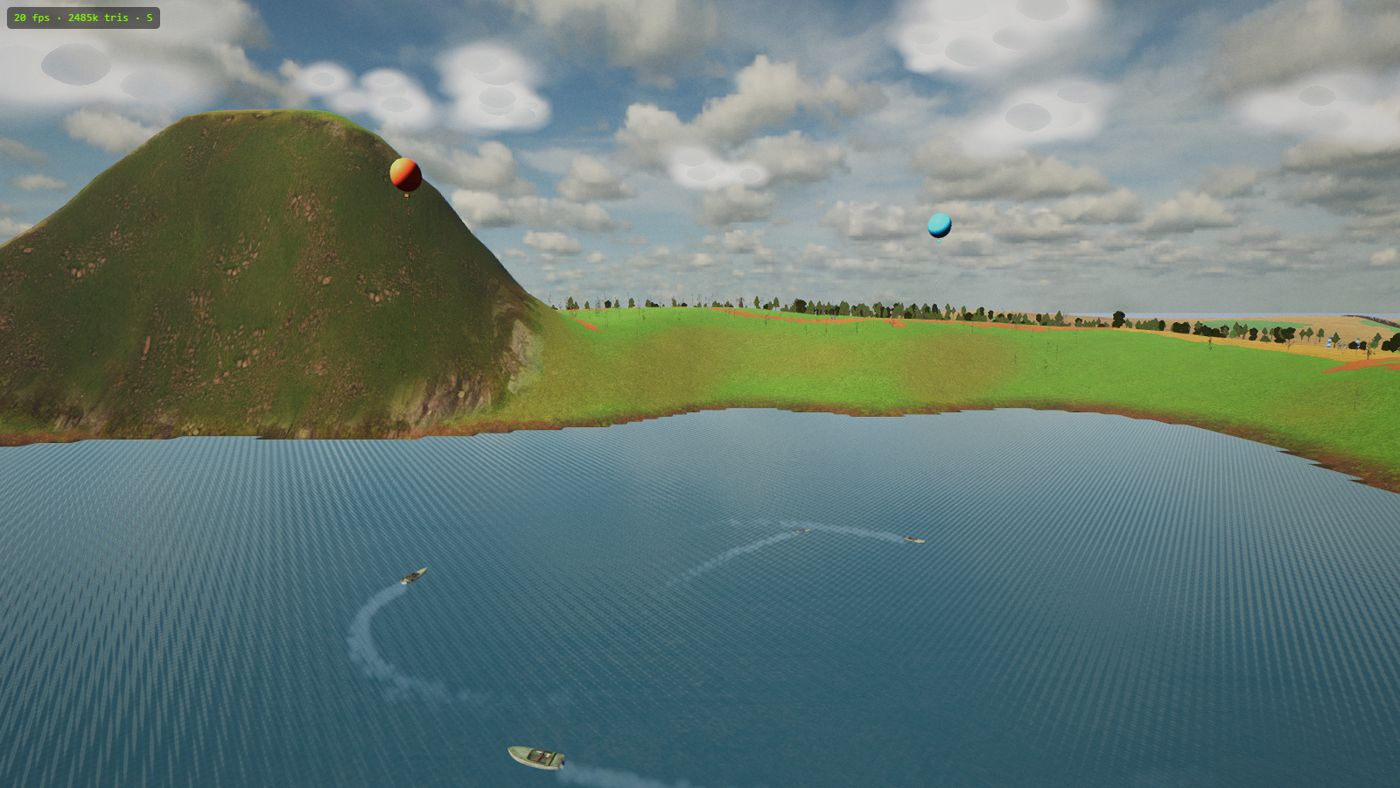
In the middle of the island sits the central lake, with motorboats cutting wakes across it and jetties poking out from the shore; a second, quieter lake hides further out. Water is the classic FPV proving ground: skim it low enough and your own nerve becomes the limiting factor, because there is no hedge to pop over — just a hard flat surface and your altitude judgement. Chasing a motorboat down its wake a metre off the water is one of the island's purest joys, and lining up a jetty for a low pass between the posts is a self-inflicted precision test whenever you want one.
The river, the bridge, the gorge, the waterfall
A river threads across the island, and it earns its keep three times over. First, the bridge: a gap with hard edges, which in FPV terms is an engraved invitation. Threading it is a rite of passage — come in straight, wings level, and resist the urge to correct at the last moment. Second, the gorge: the river drops into a steep-walled cut where the walls decide your line for you. Enter with speed, because the one thing you cannot do in a gorge is change your mind halfway. Third, the waterfall at the end of it, which is exactly the kind of landmark you fly past once for the view and then immediately turn around to fly past lower.
Gorge running rewards roll rate over top speed — the Nanawing One rolls at 241°/s and forgives a botched line far better than the heavy, fast Okhotnik. Press V to swap aircraft in flight, and see the aircraft guide for the full bench-measured numbers.
The turbine ridges
Up on the ridgelines stand rows of wind turbines, blades turning. They exist to be slalomed. A turbine run is the island's natural technical course: fixed obstacles, evenly spaced, on high ground with a view — weave between the towers, or, for the brave, time a pass through the disc of a turning blade. Because they sit on the ridges, you arrive with altitude to burn and leave with speed, which sets you up beautifully to dive back into the valley and pick up the river.
The railway: chase the train
A railway loop circles through the island, and two freight trains run it continuously, trailing diesel smoke you can see from across the valley. Train chasing is the island's best moving-target game: drop in behind one, match its speed, and hold formation just above the wagons as the line curves through the fields. The smoke is the giveaway — spot the plume, plan an intercept, and see how long you can stay locked on before a bridge or a tree line forces you off. It is also the gentlest introduction to formation flying the island offers, because a train, unlike a Spitfire, never turns unexpectedly.
Sky traffic and ground life
You do not fly here alone. A vintage biplane and a Spitfire fly low circuits over the island — hearing one go past and rolling in to join it is irresistible, and holding station on a Spitfire's wing is a real test of throttle discipline. Hot-air balloons drift over the valleys, serving as slow, stately gates for whatever course you are inventing that day. Down below, off-road vehicles patrol the dirt tracks (another moving target, twistier than the trains), boats work the lake, and the spectators near the strip watch every launch. The island is going about its business whether you show up or not — which is exactly what makes it feel like a place rather than a level.
The race woven through it all
All of these landmarks come together in the gate course. Fly through the green START arch over the runway and a lap begins, threading gates through the scenery you have just toured. Finish under 100 seconds for BRONZE, under 80 for SILVER, under 65 for GOLD — and under 55 seconds for AUTHOR, the time the sim's creator set. Your best lap can go to a global all-time leaderboard of named pilots, no account required. The racing & leaderboard guide covers lines, medals and how the board works.
Everything on this tour — terrain, trains, boats, biplane and all — runs fully offline once the sim has loaded once. It installs as a PWA, so the island fits in your pocket; only the leaderboard needs a connection, and it says so politely when there isn't one.